PhD Defense: Uncovering the Genetic Basis of Free Asparagine Accumulation in Maize Kernels
Acrylamide, a class 2A carcinogen, is formed in the Maillard reaction. The Maillard Reaction occurs rapidly between reducing sugars and amino groups in many hot, dry cooking processes such as baking and frying. Acrylamide is formed from the reaction of Maillard byproducts with free asparagine (Asn). There has been success at reducing the acrylamide formation potential of potato- or wheat-based food products by targeting precursors in either food production or in the crop itself. However, at the start of this dissertation, no research had specifically targeted free asparagine accumulation in maize kernels as a strategy to lower acrylamide‑forming potential in maize‑based foods.
Chapter one introduces the biology of asparagine metabolism and reviews existing strategies for reducing acrylamide formation. I outline the different ways to reduce acrylamide formation potential, such as in food production by using fermentation or in the plant itself by targeting reducing sugar accumulation. I argue that directly reducing free Asn in the relevant plant tissues represents the most promising strategy and summarize current knowledge of Asn metabolism and accumulation in maize kernels.
In chapter two, I took a reverse genetics approach to understand the genetic basis of free Asn accumulation in maize kernels. Leveraging the UniformMu mutagenesis resource, I evaluated eight candidate genes identified from prior genome‑wide association studies (GWAS) and weighted gene co‑expression network analysis (WGCNA) of free Asn in maize kernels. Although most of the candidate gene analyses did not yield statistically significant associations with kernel Asn levels, the study provided valuable insights and opportunities for mentoring.
In chapter three, I use two complementary quantitative genetic approaches, GWAS and quantitative trait locus (QTL) mapping, to identify the genetic basis of free Asn accumulation in kernels. I identified a major QTL on chromosome 1 corresponding to Asparagine Synthetase 3 (ASN3), which was notably absent in the GWAS results. Long‑read sequence analysis revealed a three‑exon deletion in the low‑Asn parent of the mapping population, helping to reconcile the discrepancy between the GWAS and QTL findings.
Finally, chapter four synthesizes the key findings from the dissertation and outlines future research directions. Future directions include evaluating existing CRISPR–Cas9 constructs targeting all four maize Asparagine Synthetase genes. I conclude by discussing how this research can be translated into the development of low‑acrylamide maize‑based food products and how the findings may also contribute to producing maize with reduced kernel nitrogen content.
Publications
Fitzsimmons SL, Salazar-Vidal, MN, Traylor ZB, Draves MA, Flint-Garcia S. 2025. How to Pollinate Corn (Zea mays). Cold Springs Harbor Maize Protocols.
Oliver SL, Yobi A, Flint-Garcia S, Angelovici R. 2024. Reducing Acrylamide Formation Potential by Targeting Free Asparagine Accumulation in Seeds. Journal of Agricultural and Food Chemistry. 2, 12, 6089–6095.
Doctoral Program Committee
- Dr. Sherry Flint-Garcia
- Dr. Ruthie Angelovici
- Dr. David Braun
- Dr. Craig Schenk
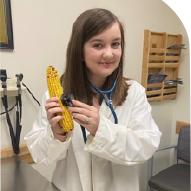
Sarah Fitzsimmons
Ph.D. Candidate
Division of Biological Sciences
University of Missouri